
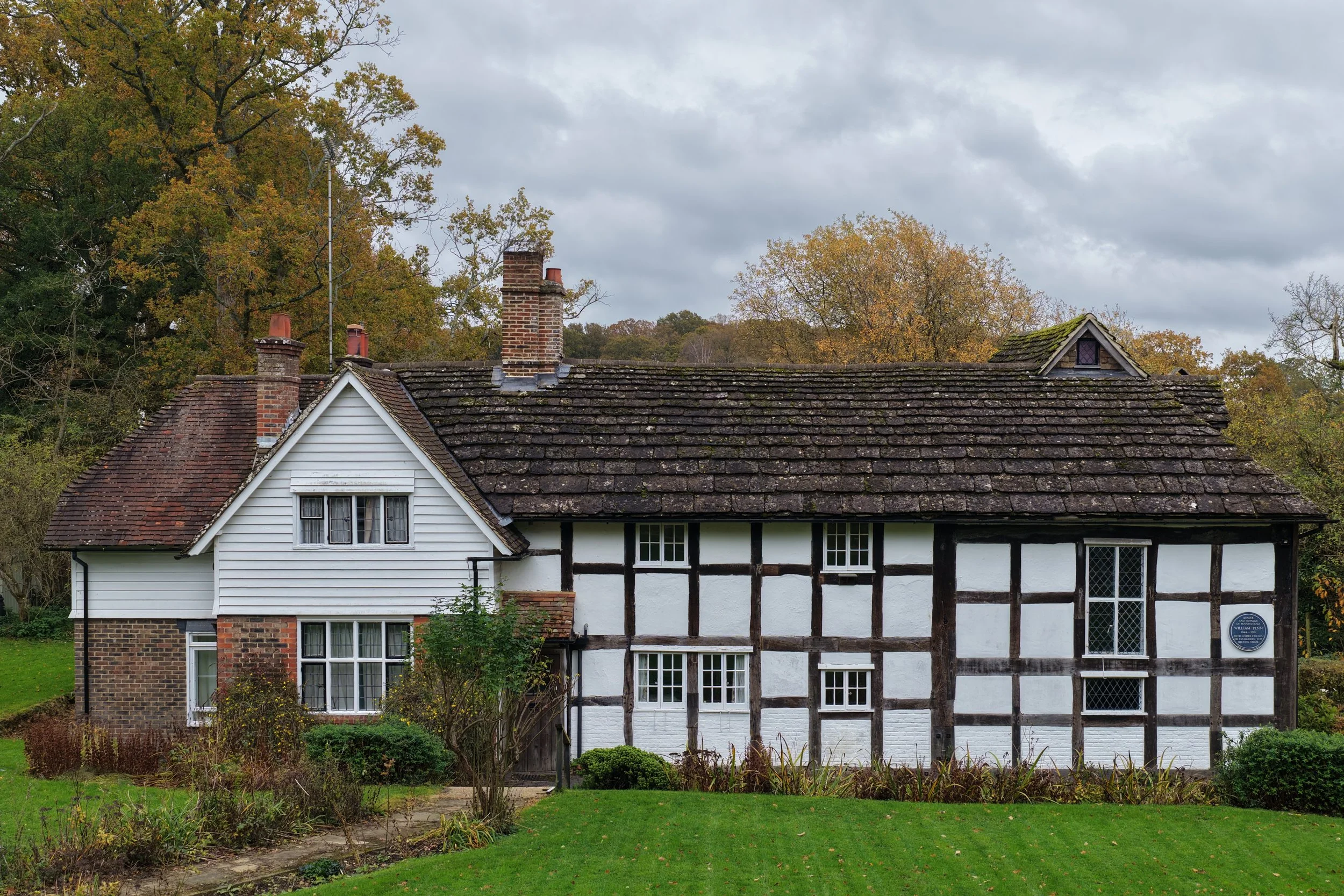
The Blue Idol
The Blue Idol Quaker Meeting House is one of West Sussex’s most quietly remarkable heritage buildings. Dating back to the 15th century, it began life as a medieval timber-framed farmhouse before becoming a Quaker meeting house in the early 1700s. For over three centuries it has been a place of worship, reflection, and community, associated with William Penn, founder of Pennsylvania, who worshipped here and helped shape its development. Few places in the region carry such an unbroken thread of rural, spiritual and architectural history.
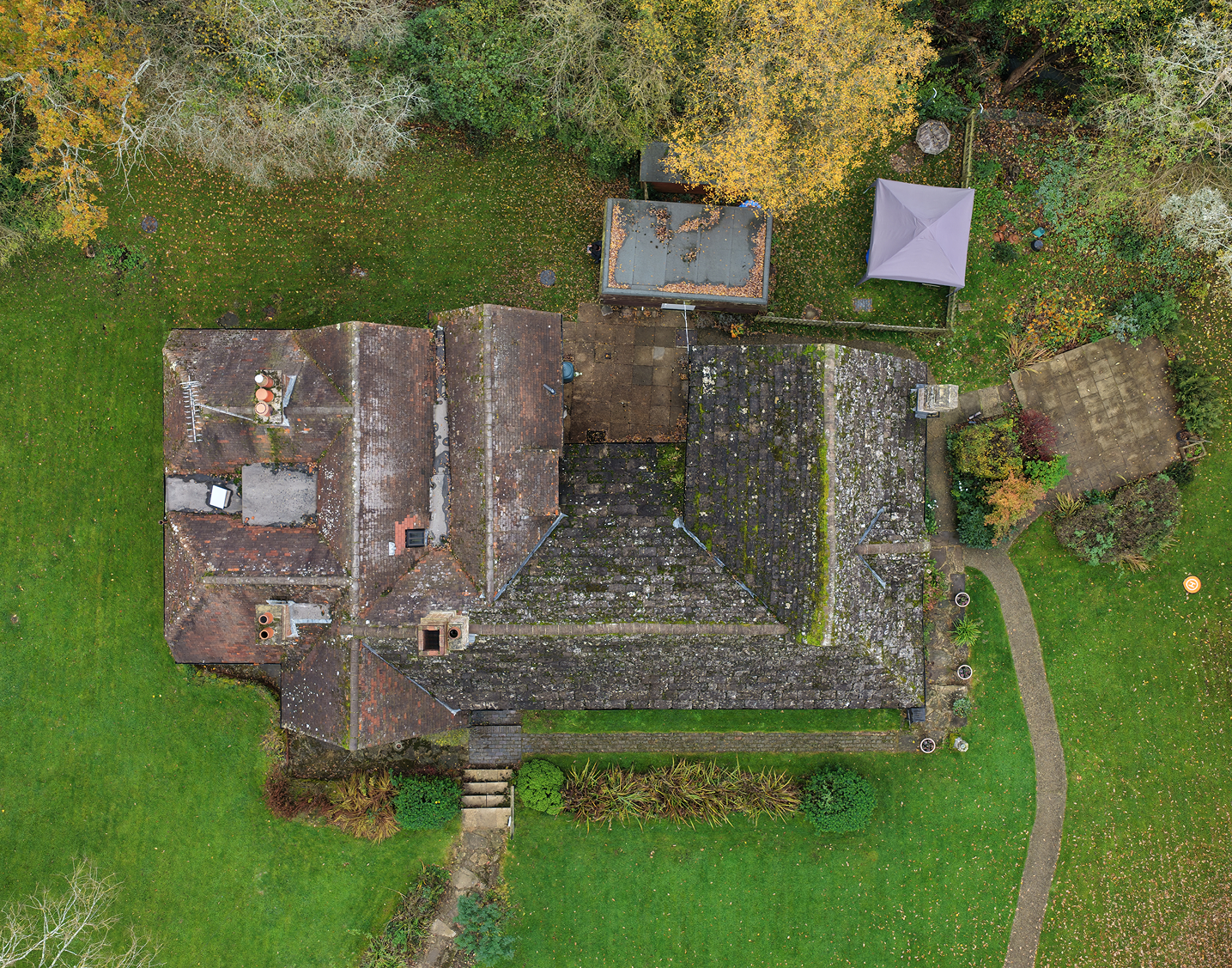
The Blue Idol from above (November 2025)
A building shaped by its landscape
Set in the heart of the West Sussex countryside, the Blue Idol sits within a landscape of soft fields, woodland edges, and ancient boundary lines. The area retains its historic character, with narrow lanes, scattered farmsteads and the distinctive rural quiet that has shaped the meeting house’s role across generations. Its position just outside Coolham, not far from Horsham, gives it a setting that feels deeply connected to the rhythms of the land.
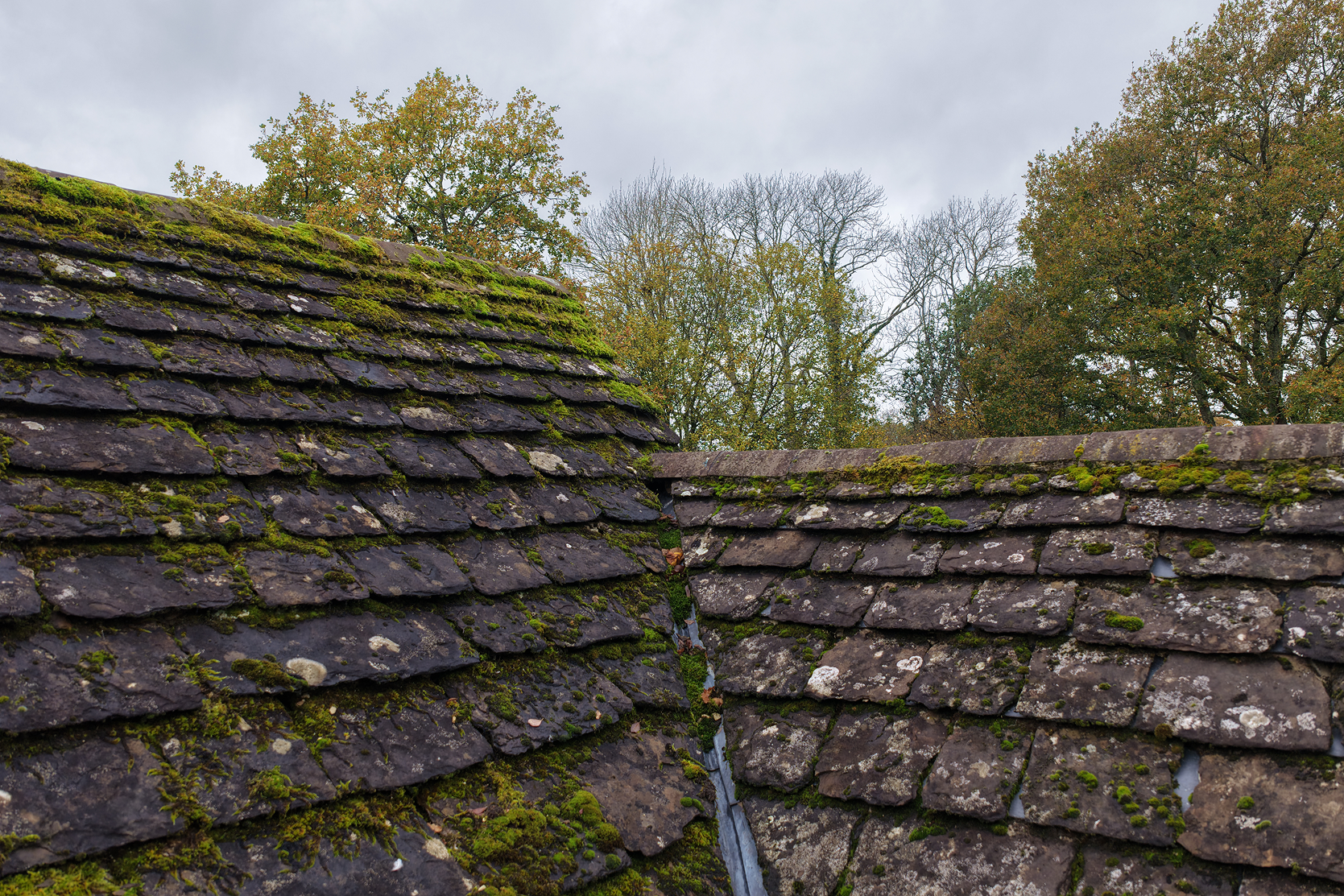
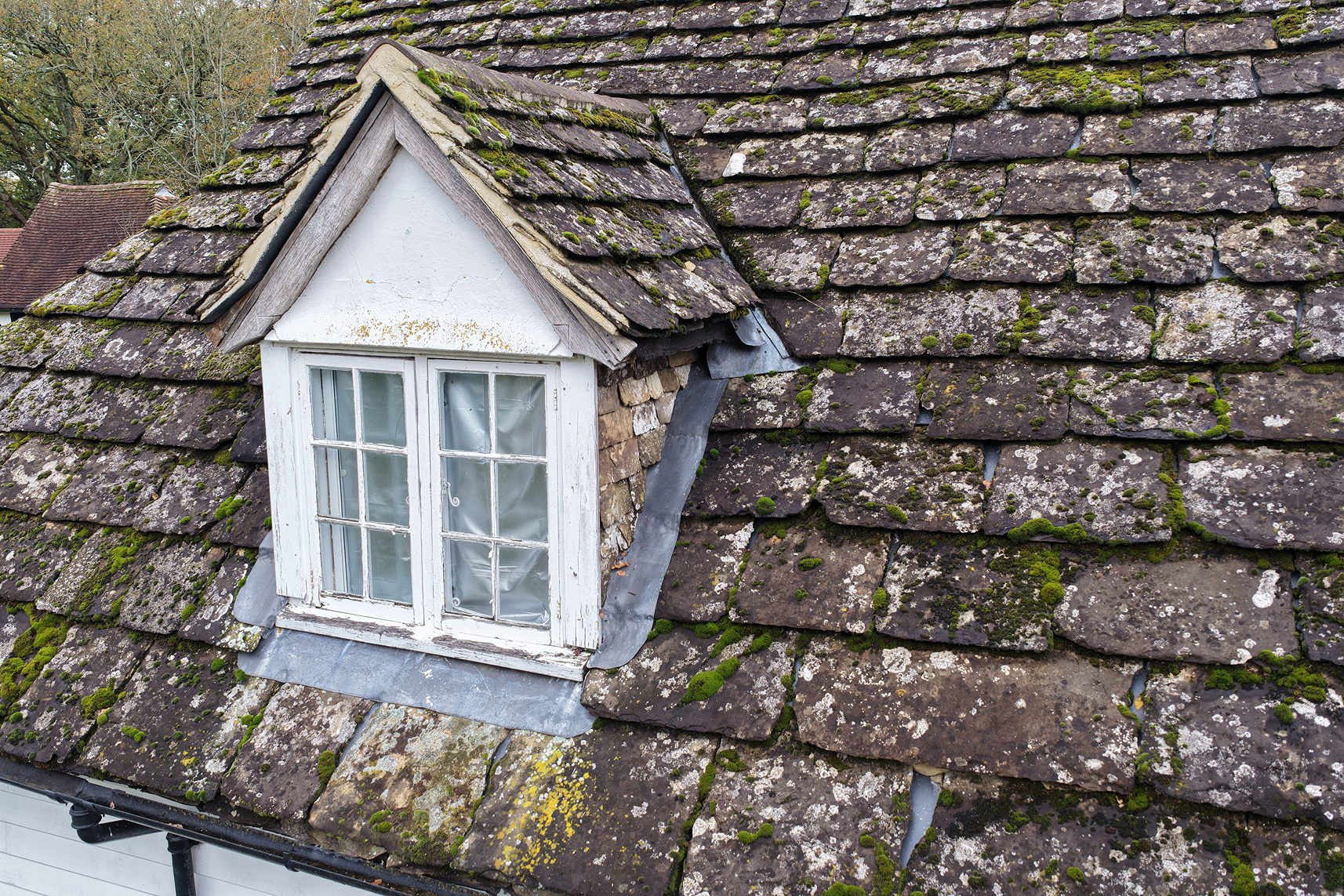
Close up of Horsham Stone on The Blue Idol roof. (November 2025)
Horsham Stone: The character of the roof
One of the defining features of this building is its roofing material. Much of the structure is covered with Horsham stone slabs, a traditional local stone used across Sussex for hundreds of years. These heavy, beautifully weathered stone tiles give the building its distinctive appearance but also require careful conservation. Horsham stone roofs age differently from modern clay or slate roofs; they can crack, delaminate, or shift over time, and repairs must be handled with specialist knowledge to preserve their authenticity.
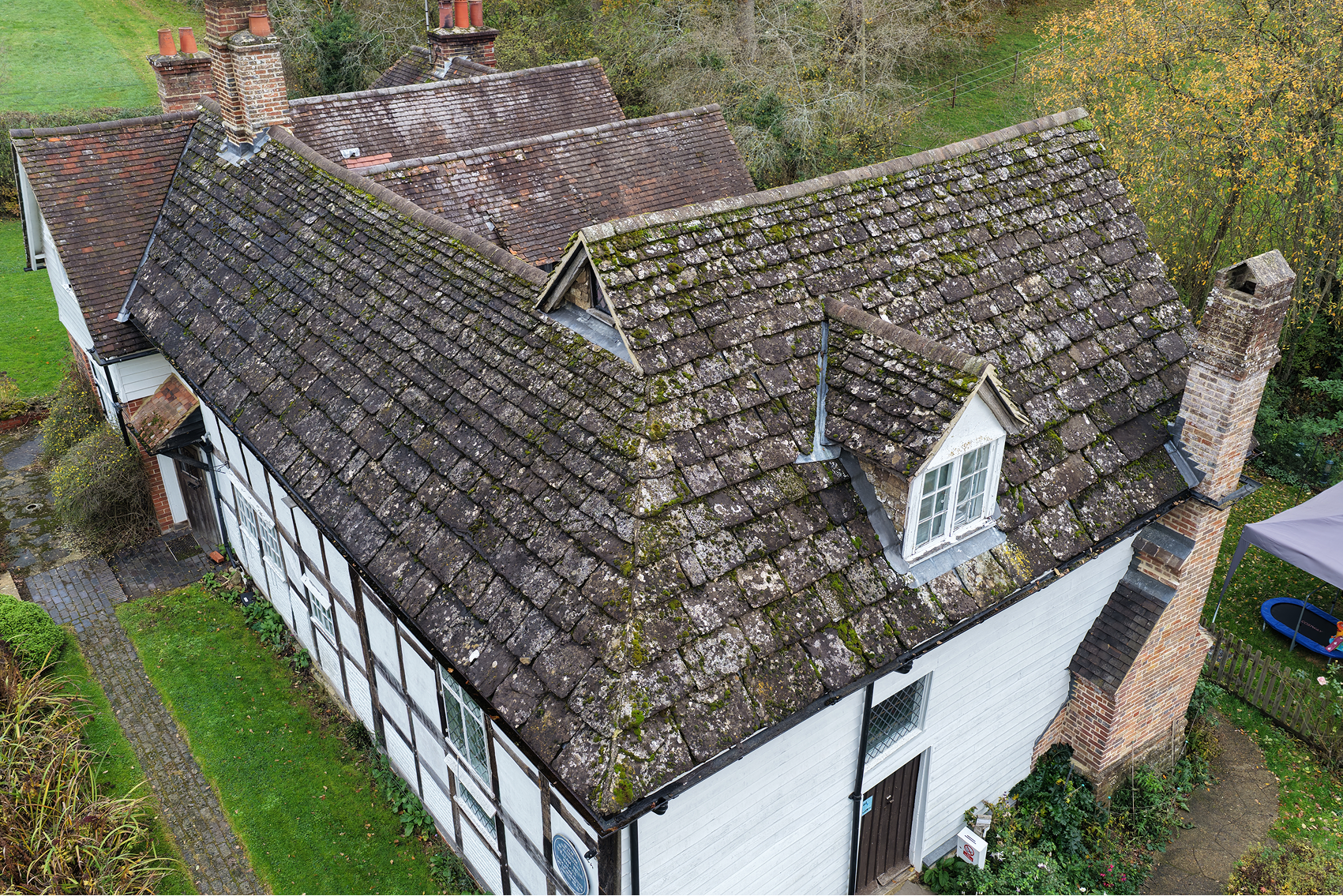
The Horsham Stones will need some work following the drone survey.
What the drone survey revealed
During my visit to carry out the aerial inspection, several issues were identified that require attention:
Cracked Horsham stone slabs
Cracked and slipped clay tiles
Vegetation and organic growth in key areas
Blocked or partially obstructed gutters
General weathering consistent with the building’s age
While none of these issues were catastrophic, they highlight the importance of proactive maintenance for a building of this age and significance. Early detection is key to avoiding deeper structural or water-ingress problems later.
Why drones matter for 15th-century heritage buildings
Traditional roof inspections on heritage buildings can be intrusive, costly, and sometimes unsafe, especially when working with fragile materials such as Horsham stone. Using a drone allows the entire roof to be documented quickly, safely, and without any physical contact with the structure.
For the Blue Idol Meeting House, the drone survey provided:
Highly detailed imagery of all elevations
Close inspection of stone slabs and tiles without scaffolding
Identification of precise areas needing repair
A clear, objective record for trustees and maintenance teams
This level of accuracy helps ensure that interventions remain minimal, targeted, and sympathetic to the original fabric of the building.
Deliverables: video + prioritised report
The project deliverables included:
A high-resolution 4K video flyover, offering a full visual overview of the roof (shown here)
A traffic-light condition report, enabling the Meeting House team to prioritise repairs based on urgency:
Red – areas requiring immediate attention
Amber – issues to monitor and address during planned maintenance
Green – sections in good condition
This format gives the trustees a practical framework for planning conservation work in a responsible and cost-effective way.