
Five Historic Churches We Worked Around in 2025
Churches remain some of England’s most architecturally complex and historically rich buildings. From early medieval chapels to Victorian parish churches, their towers, roofs and masonry often require careful inspection — yet traditional access methods can be costly, disruptive and risky.
In 2025, we worked with churches, trusts and conservation groups across England to deliver high-resolution drone surveys and condition reports, supporting maintenance planning, funding applications and long-term preservation. Below are five church projects that stood out — each demonstrating how aerial documentation can support heritage conservation with precision and care.
1. Hornsey Parish Church – London
Mid-20th Century Parish Church
Hornsey Parish Church presents a distinctive mix of historic form and mid-20th-century construction. Our drone survey focused on roof coverings, junctions, drainage routes and vertical masonry elements that are difficult to inspect safely from ground level.
The resulting imagery provided a clear record of roof condition, surface weathering and detailing around parapets and elevations. This dataset now serves as a baseline reference for future maintenance planning and long-term asset management within a dense urban context.
2. The Chapel of St Peter – Essex
6th Century Chapel
One of the oldest standing Christian buildings in England, the Chapel of St Peter is a rare and fragile site. Any inspection work must be undertaken with minimal disturbance to the structure and surrounding landscape.
The Chapel of St Peter, Essex dates from the 6th century and is often described as the oldest purpose-built Christian church still in use in England. It stands on a quiet coastal site and is built largely from reused Roman brick and stone, taken from nearby ruins. The building is extremely simple in form, with thick walls and very little decoration, which gives it a directness that feels closer to archaeology than architecture. It is still used for worship today and is well worth visiting for anyone interested in early Christian sites or the transition from Roman Britain to Anglo-Saxon England.
3. The Blue Idol Quaker Meeting House – West Sussex
15th Century
The Blue Idol is a rare surviving Quaker meeting house with a distinctive vernacular character. Our aerial survey focused on roof materials, ridge lines, rainwater goods and the relationship between the building and its immediate surroundings.
By combining contextual aerial views with detailed close-range imagery, the survey produced a practical visual record that can be used for condition monitoring, conservation planning and interpretation of the site’s historic fabric.
4. Thundridge Old Church - Hertforshire
15th Century
Thunbridge Old Church is a remarkable example of late medieval ecclesiastical architecture, with origins reaching back to the 1400s. Nestled in the Hertfordshire countryside, its enduring stonework and traditional church form reflect centuries of local history and community life.
The building’s ageworn masonry, historic tower and serene setting make it a fascinating stop for anyone interested in England’s architectural past.
Whether you’re a lover of historic buildings, a passer-by drawn by curious spires, or someone who enjoys imagining the lives of centuries-past parishioners, Thunbridge Old Church offers a rich and evocative glimpse into the past.
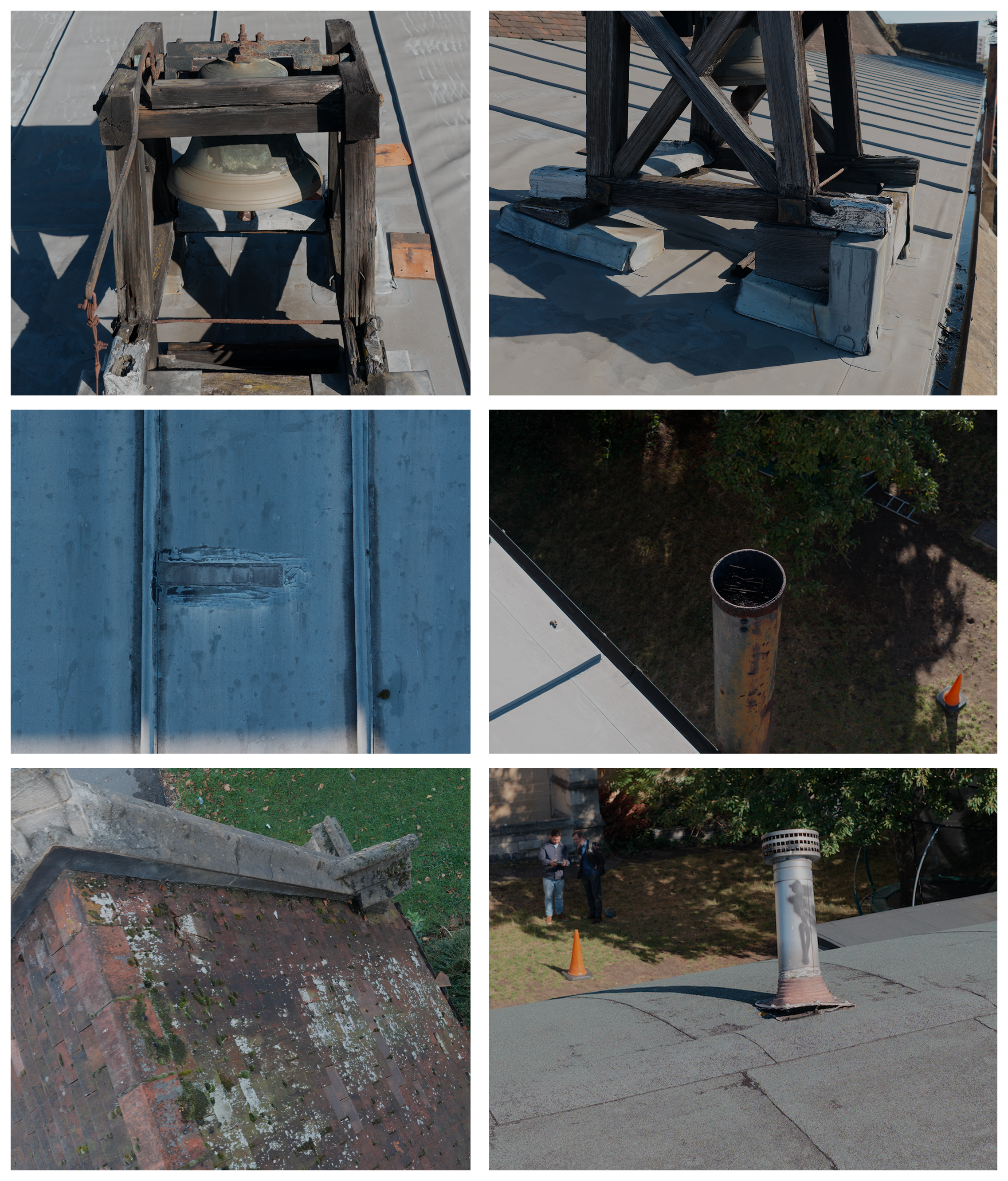
5. Holy Innocents Church – London
18th Century
Holy Innocents Church combines historic timber elements, bell structures and roof forms that are challenging to document safely using traditional access methods. Our drone inspection focused on roof condition, structural interfaces and external features associated with the bell housing.
The imagery now forms part of an ongoing visual archive, supporting maintenance discussions and helping stakeholders understand the condition of the building without invasive inspection.
Supporting Church Conservation Through Aerial Surveys
Across all five projects, drone technology enabled:
Safe inspection of roofs, towers and elevations
High-resolution visual records without scaffolding
Repeatable surveys for long-term condition monitoring
Clear imagery suitable for reports, funding bids and stakeholder review
As churches continue to face rising maintenance costs and increasing pressure on budgets, aerial surveys offer a practical, non-intrusive tool for understanding condition and planning conservation work responsibly.
If your church, diocese, trust or conservation body requires professional drone surveys, roof inspections or heritage-focused condition reports, we would be pleased to support your work in 2026 and beyond.