
Thermal Imaging for Commercial Property Inspections in London
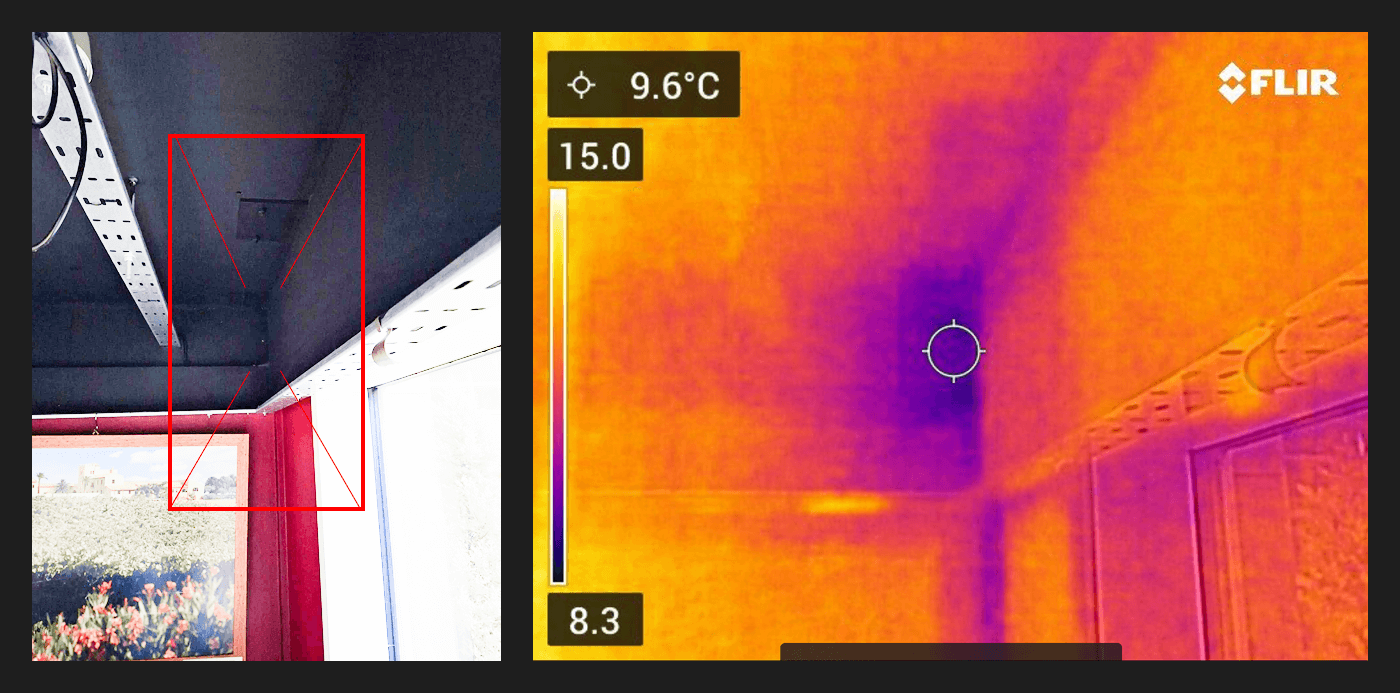
Illustrative example from a commercial thermal imaging inspection.
Thermal imaging is an increasingly valuable tool in commercial property inspections, particularly where surveyors or property managers need a deeper understanding of what may be happening behind walls, ceilings, and structural finishes.
In a recent inspection of a commercial property in London, thermal imaging was used to support a wider investigation where there was suspected water ingress from a landscaped roof garden above. Due to the nature of the construction and internal finishes, a visual inspection alone was not sufficient to understand whether moisture-related issues might be present.
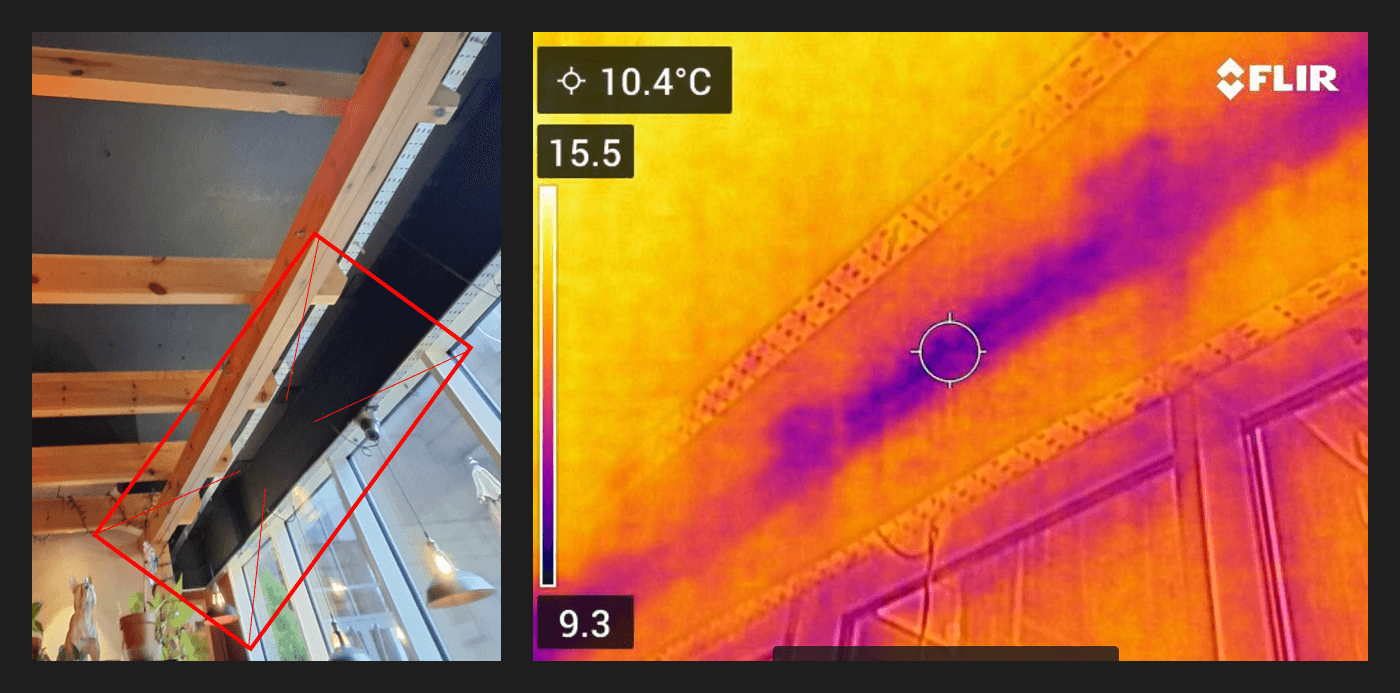
Visual and thermal comparison showing temperature variation along a structural ceiling element beneath a planted roof. Such patterns may be consistent with moisture retention or thermal bridging and require contextual interpretation.
Why Thermal Imaging Was Required
The property had previously been flagged by a surveyor as potentially at risk of moisture ingress beneath a planted roof structure. However, the internal ceilings were finished in a way that concealed the underlying substrate, making traditional visual assessment inconclusive.
Thermal imaging was therefore requested to:
Identify temperature variations across walls and ceilings
Compare stable background temperatures with localised anomalies
Assist in assessing whether observed temperature patterns may warrant further consideration in the context of moisture retention or heat loss.
Highlight areas that may be prioritised for further consideration by the appointed surveyor.
This type of inspection is particularly useful in commercial buildings where invasive opening-up is undesirable or impractical.
How the Inspection Was Carried Out
Using a FLIR thermal imaging camera, the property was systematically inspected internally, with attention paid to:
Ceiling planes beneath the roof garden
Upper wall junctions and structural transitions
Areas previously identified as higher risk
Thermal images were analysed by comparing stable temperature zones across the room with areas showing irregular or linear temperature anomalies. Where anomalies were identified, they were assessed in context rather than in isolation.
Thermal imaging does not detect water directly. Instead, it highlights temperature differences which can be consistent with moisture retention, insulation defects, or thermal bridging. For this reason, thermal imaging is best used as part of a non-invasive investigative process, rather than as a standalone diagnostic tool.
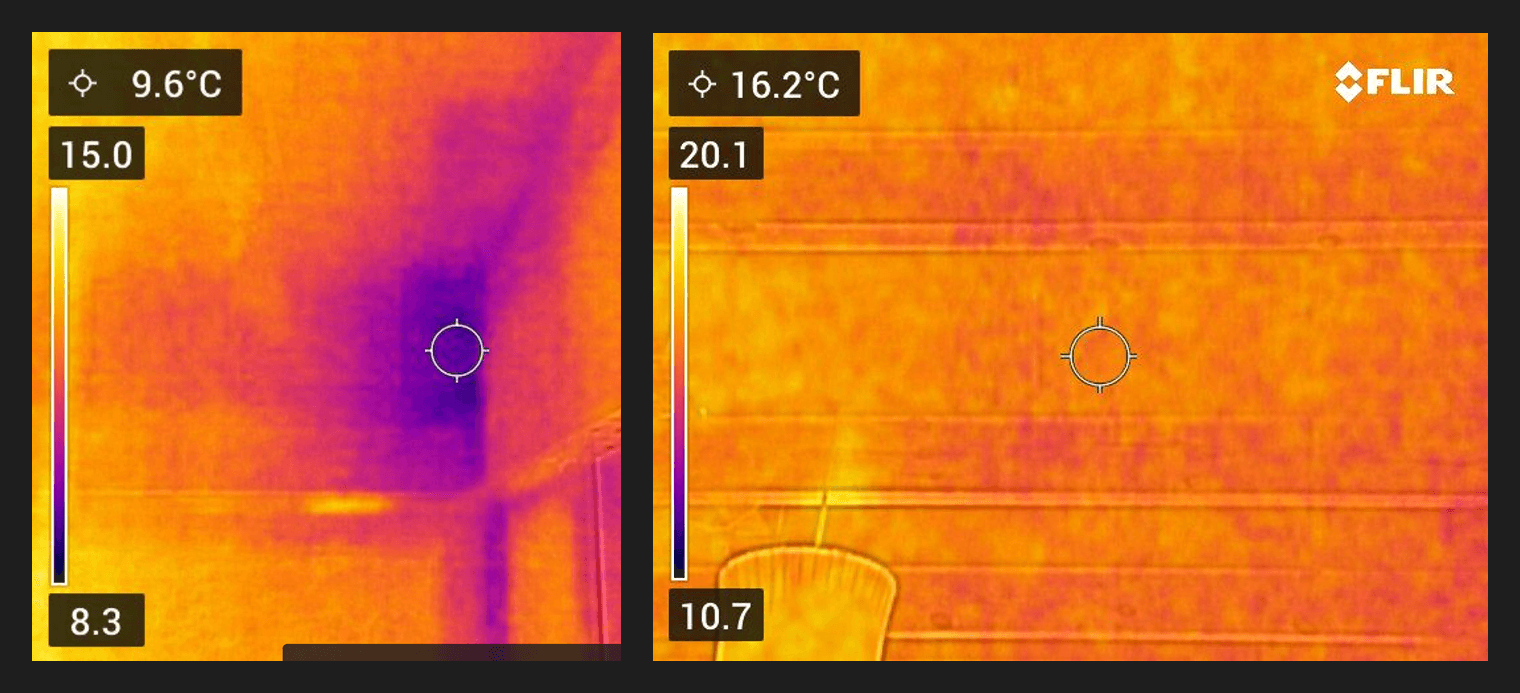
Side-by-side thermal images showing a localised temperature anomaly compared with a stable background area during a non-invasive commercial thermal imaging inspection.
Understanding the Results
In this case, thermal imaging allowed the survey team to:
Visualise patterns not visible to the naked eye
Better understand how conditions varied across different areas of the structure
Provide supporting evidence to inform further decisions
This approach helps reduce uncertainty and supports more informed discussions between surveyors, property owners, landlords, and managing agents.
Applications Beyond Water Ingress
Thermal imaging is not limited to leak investigation. It is also highly effective for:
Identifying heat loss in commercial buildings
Locating insulation defects
Investigating cold bridging
Supporting planned maintenance and refurbishment decisions
Reducing unnecessary intrusive works
For commercial properties in London, where access, disruption, and downtime are critical considerations, thermal imaging offers a fast, non-destructive method of gaining insight into building performance.
A Professional, Non-Invasive Service
We are pleased to offer professional thermal imaging inspections for commercial properties, suitable for use alongside building surveys, condition reports, and maintenance planning.
All inspections are:
Non-invasive
Context-led
Carried out using professional-grade FLIR thermal equipment
Supported by clear imagery and written observations
Thermal imaging inspections start from £400 per inspection, depending on property size, complexity, and reporting requirements.
Important Note on Limitations
Thermal imaging is an investigative tool and should be interpreted by a competent professional. Results are indicative, not definitive, and may be influenced by environmental conditions, building construction, and usage at the time of inspection. Where required, further investigation may be recommended.
Get in Touch
If you are a surveyor, landlord, or managing agent looking to better understand heat loss, moisture risk, or building performance within a commercial property, thermal imaging can provide valuable insight.
For enquiries or to discuss a specific site, please get in touch.