
How We Produce Clear, Visual Roof Inspection Reports
Our roof inspection reports are designed to be clear, visual, and easy to understand, helping clients and professionals make informed decisions using accurate visual data.
We focus on documenting condition, not diagnosing or specifying repairs. The aim is to present reliable evidence that can be reviewed by surveyors, contractors, insurers, and property owners.
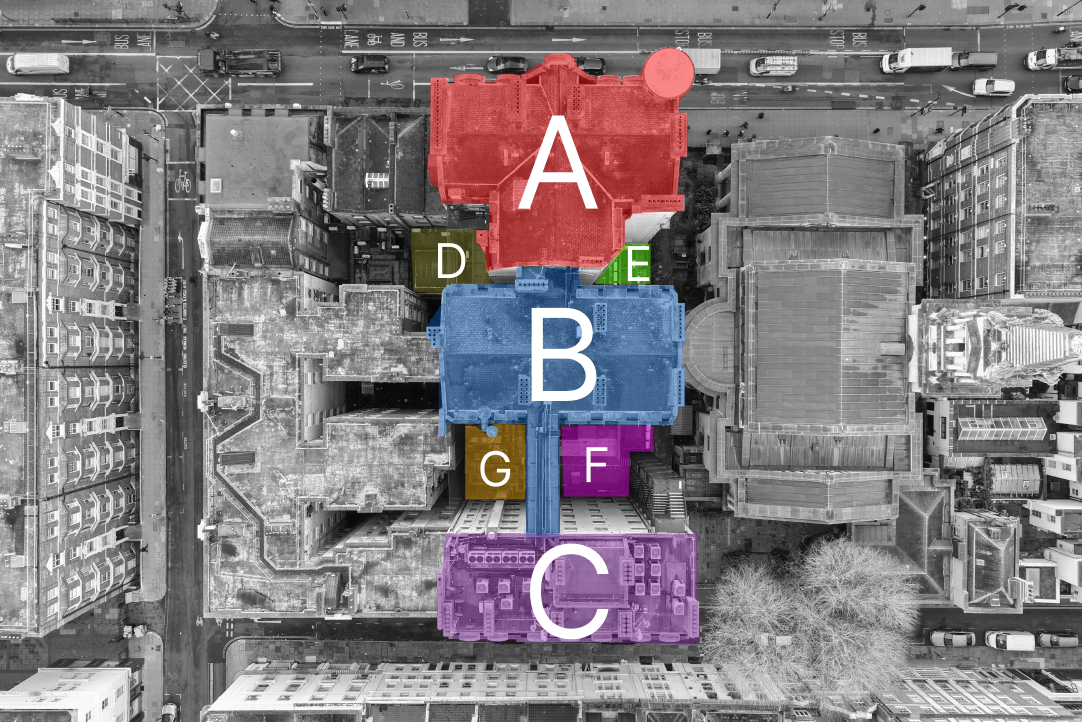
Step 1: Aerial Overview and Sectioning
Each report begins with a high-level aerial overview image of the building. This allows us to divide the roof into clear, logical sections, creating a simple visual reference for the rest of the report.
This overview helps readers quickly understand the layout of the roof and where specific observations are located.
Step 2: Clear Visual Labelling
Observed features and defects are then labelled using architectural-style references (for example A1, A2, B1).
These labels are applied consistently across images and drawings, making it easy to cross-reference issues without confusion.
This structured approach ensures nothing is missed and allows multiple professionals to review the same information clearly.
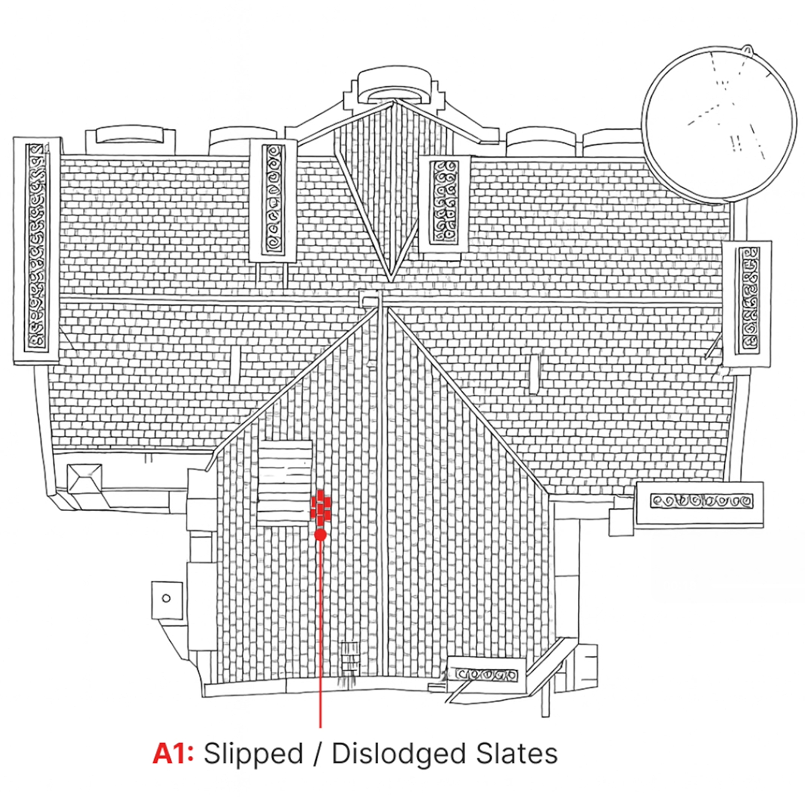
Step 3: High-Resolution Images and Close-Ups
Each labelled area is supported by high-resolution photographs and close-up imagery captured by drone.
These images provide clear visual evidence of roof coverings, junctions, flashings, chimneys, gutters, and other elements that are difficult or unsafe to inspect from ground level.
Where internal access is available, internal roof-space images may also be included to support the external findings.
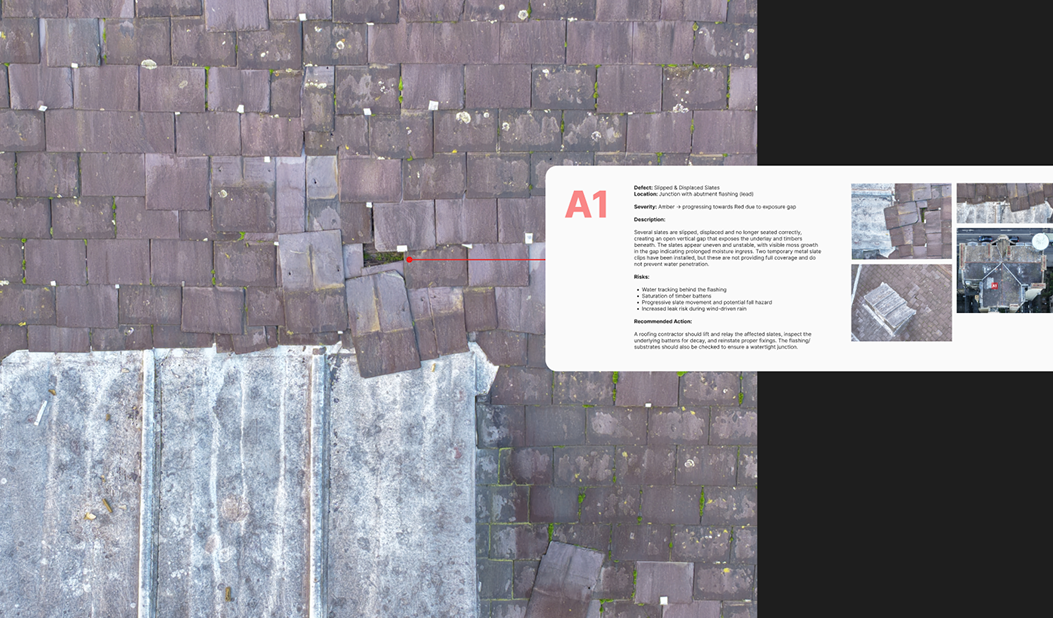
Step 4: A Clear, Practical Report
The final report brings everything together in a straightforward, visual format.
It allows surveyors, contractors, insurers, and property owners to:
Understand roof condition at a glance
Locate specific areas quickly
Prioritise further investigation or repair work
Use consistent visual evidence for discussions and decisions
Our role is to capture, organise, and present accurate visual data. Any assessments, specifications, or decisions are made by the relevant qualified professionals using the information provided.