
Documenting the Victorian Society’s Top Ten Endangered Buildings 2026
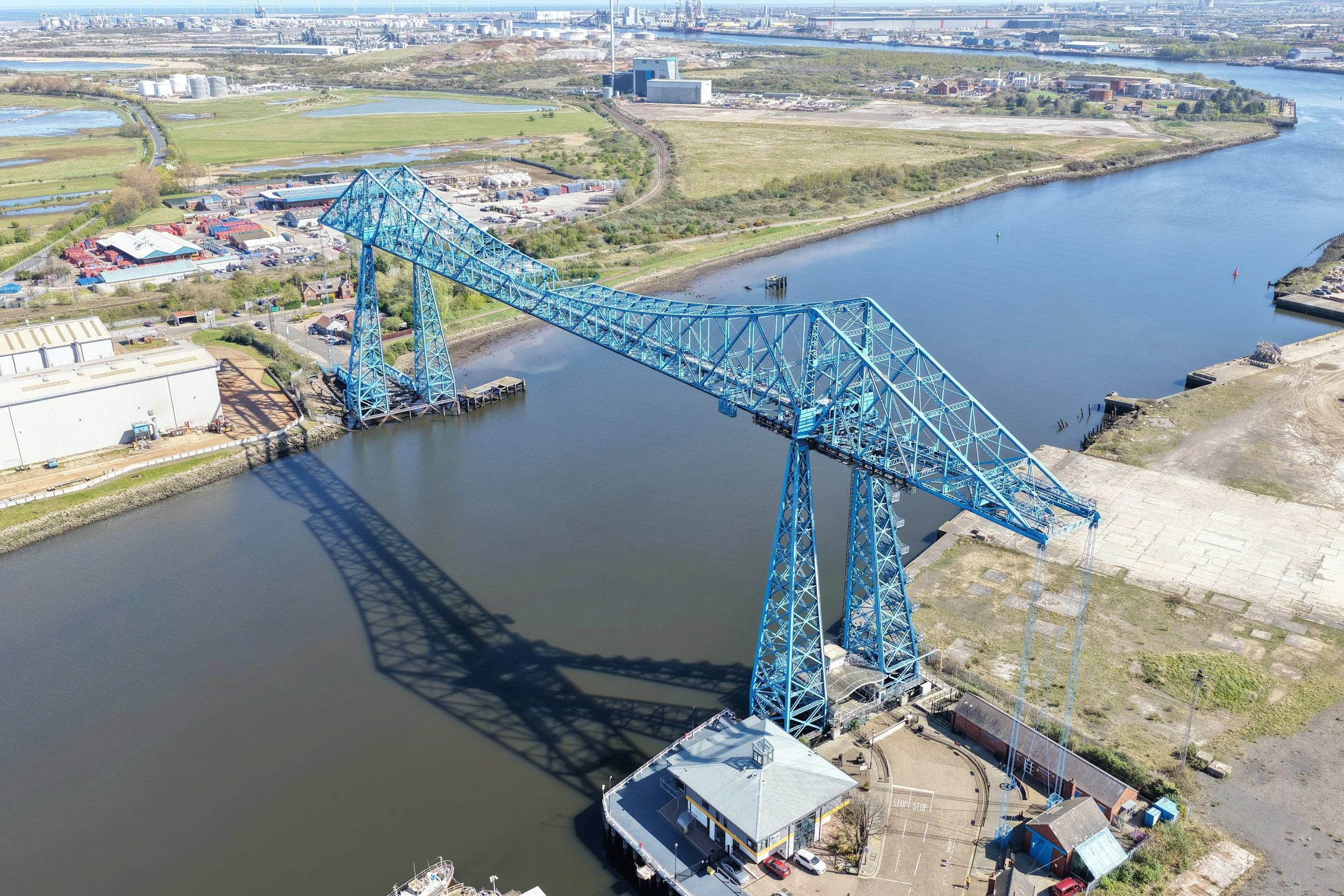
The Tees Transporter Bridge, one of the structures featured in the Victorian Society’s Top Ten Endangered Buildings 2026 campaign.
Opened in 1911, the bridge remains one of the most recognisable pieces of industrial heritage in the UK and one of the last transporter bridges of its kind still standing.
Closed since 2019, the structure now faces an uncertain future as major restoration and repair works are required to secure its long-term survival.
This year, CAV Aerial was commissioned by The Victorian Society to help document a selection of buildings featured in their 2026 Top Ten Endangered Buildings campaign.
The annual list highlights some of the most architecturally and historically significant Victorian and Edwardian buildings at risk across England and Wales. This year’s entries ranged from industrial infrastructure and public buildings to cemetery chapels, market halls and former railway structures — many of them suffering from long-term neglect, vacancy, structural deterioration or uncertain futures.
The project involved travelling across the country to capture aerial documentation of several sites, including the Tees Transporter Bridge, the Hackney Borough Disinfecting Station and St Michael's Roman Catholic Cemetery Chapel. Many of the buildings were inaccessible or difficult to properly understand from ground level alone, making aerial inspection and photographic documentation particularly valuable.
The Tees Transporter Bridge was another remarkable site to document. Built in 1911 and spanning the River Tees between Middlesbrough and Port Clarence, the bridge remains one of the most recognisable pieces of industrial heritage in the North East. The Victorian Society described it as “an iconic symbol of Teesside’s industrial heritage”, although the structure has remained closed since 2019 and requires major repair works estimated at around £60 million.
The campaign attracted significant national media attention, with coverage appearing across the BBC, Time Out, ITV News, BD Online, Arts Professional, Smithsonian Magazine and The Yorkshire Post.
What became clear throughout the project was how important visual documentation has become in heritage conservation campaigns. Aerial imagery allows organisations, local authorities and the public to properly understand the scale and condition of buildings that are often difficult or dangerous to inspect conventionally.
Many of these structures remain hidden behind hoardings, inaccessible roofs, scaffolding or decades of neglect. In several cases, the aerial documentation captured details and deterioration that would have otherwise remained unseen.
The Victorian Society’s campaign also reinforced an increasingly important point within the heritage sector: these buildings are not obsolete. As President Griff Rhys Jones stated during the campaign launch, many of these structures were “constructed with such strength and integrity that they can continue in service today.”
For CAV Aerial, the project represented an opportunity to support a nationally important conservation campaign while demonstrating how aerial inspection and documentation can contribute to the wider understanding and preservation of historic buildings.
As heritage organisations, trusts and local authorities continue to face growing maintenance challenges, access constraints and funding pressures, clear visual evidence and condition documentation are becoming increasingly valuable tools in helping endangered buildings secure attention, investment and ultimately a future.