
A Drone Survey of St Michael's: Planning Access, Reading a Crack, and Knowing When to Stop
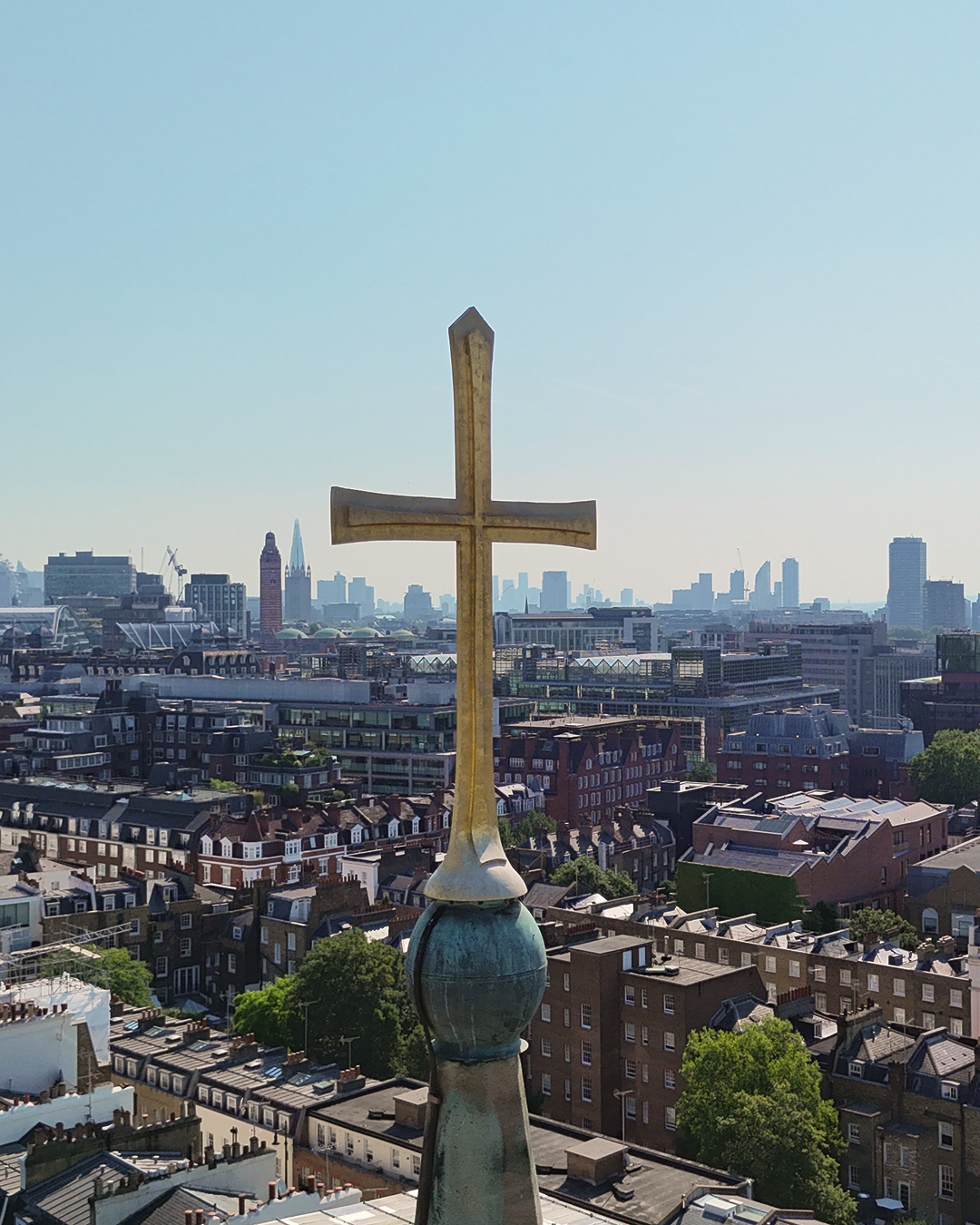
Universal Stone brought me in to carry out a drone survey at St Michael's Church in Belgravia, a Grade II listed building that has stood since the 1840s.
The church was designed by Thomas Cundy the younger, surveyor to the Grosvenor Estate, and its broach spire, rising to around 150 feet above the ragstone tower, has looked out over Chester Square for close to 180 years. Like a lot of London's Victorian church spires, it now needs some careful attention, and that's where this job began.
The brief had four parts, and each one shaped how the flight was planned.
Working out the height for the cranes and cherry pickers
Before any scaffolder, spider crane operator, or cherry picker crew turns up on site, someone needs an accurate figure for how high they'll actually be working. Get it wrong and you're either bringing underpowered kit that can't reach the spire, or paying for more machine than the job needs.
A drone survey gives that figure quickly and precisely, without anyone needing to go up first. It also feeds directly into the practical side of the job that often gets forgotten until it's urgent: road closure applications and notifications to the council.
Chester Square is a residential garden square in the middle of Belgravia, and getting a spider crane or cherry picker into position there means working with the local authority well ahead of time. Knowing the exact height and reach required lets the team plan that properly, rather than guessing and adjusting on the day.
2. Getting close to a crack that could only be seen from the street
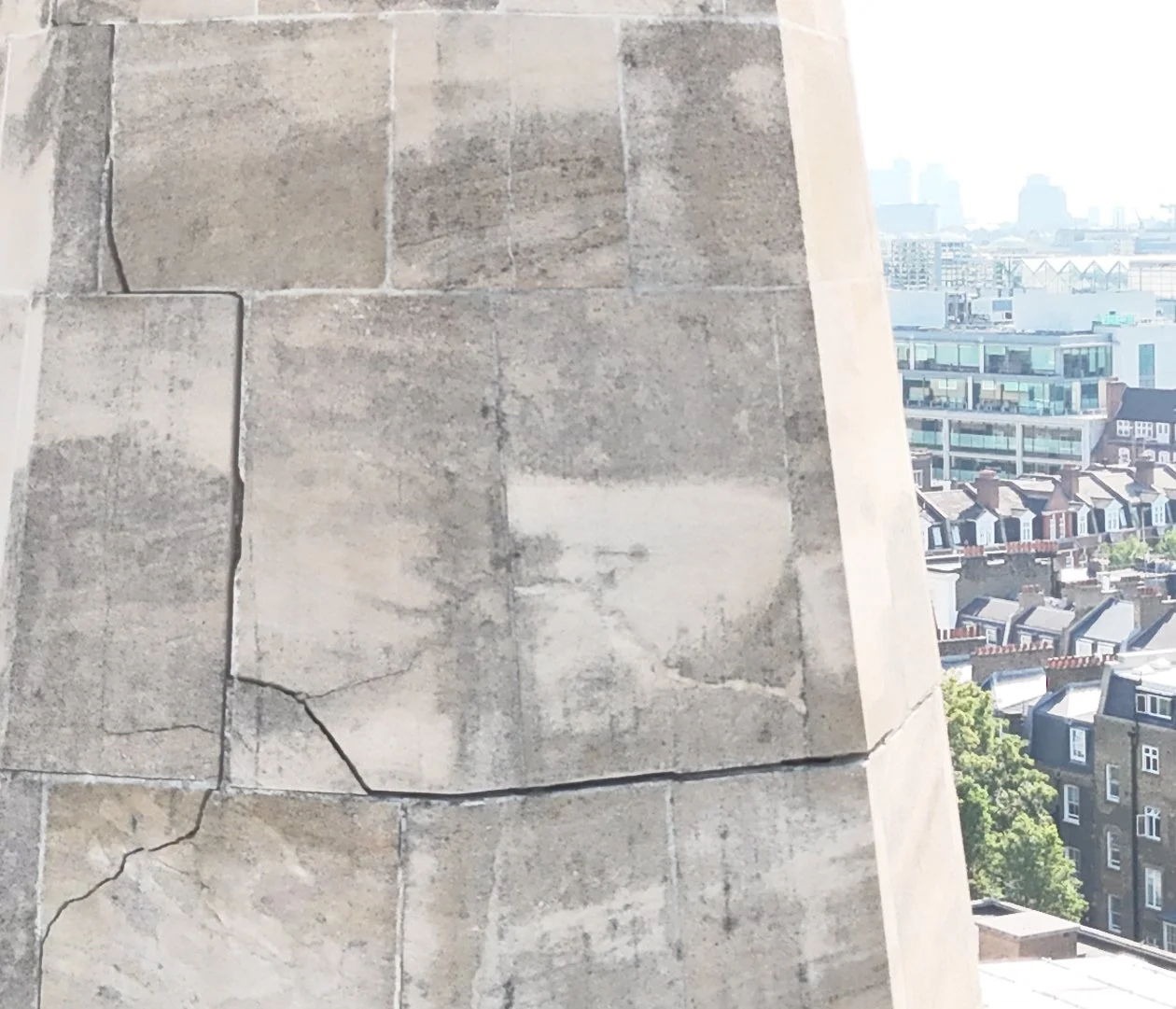
Close in with the drone, the crack that was only a faint line from street level turned out to be a joint with the mortar missing entirely — the kind of detail that changes how a repair gets specified.
There was a crack visible in the spire from ground level.
Taking the drone up let us get right up against the stonework and look properly. Close in, it was clear the mortar within the crack was missing — not just weathered or thin, but gone. That's a meaningful difference for whoever specifies the repair. A hairline crack with sound mortar behind it is one job; a crack with the mortar bed missing, letting water track further into the joint, is another. Having that detail before scaffolding goes up means the contractor can plan for the right repair rather than a general one.
3. Going inside the tower — and knowing when to call it
The next part of the brief was to check whether the crack was visible from inside the spire as well as outside. That meant climbing the tower with the drone, setting up appropriate lighting, and fitting a spotlight to the drone itself to see into the dark, enclosed space at the top.
We got the tower climbed, the lighting set up but decided to cancel the drone flight
The internal space at the top of a spire was high risk if a lithium battery had failed and caught fire mid-flight, and the drone had come down on a wooden dry platform. As I had no way reach it, there would have been no way to put that fire out. The best course of action was to stop and arrange a better time to come back once access was avaialble and the risk was mitigated.
4. Recording the stone for handover
Photographing and recording the stone fittings that Universal Stone's team had already zoned across the building, so each piece could be labelled correctly ahead of handover. This included detail images of stain glass windows, metal work and stone work. A clear photographic record, tied to the zoning already done on site, makes that handover far easier for everyone coming after.
Why this matters for a building like St Michael's
For a listed building with a history stretching back to Thomas Cundy's original design and the later addition of Giles Gilbert Scott's War Memorial Chapel, that kind of careful, low-impact assessment matters. It gives architects, conservation officers, and the stonemasons doing the actual repair work a clearer picture before anyone commits to scaffolding, plant hire, or a schedule of works.
If you're planning access, assessing damage, or need eyes on a part of a church, tower, or spire that isn't safely reachable any other way, a drone survey is often the sensible first step — not instead of the judgement of the people on the ground, but to give them better information before they climb up.