
Returning to a North London Renovation Project: What Changed After the Roof Repairs?
Two months ago I was instructed to carry out a drone inspection of a large residential property undergoing renovation in North London.
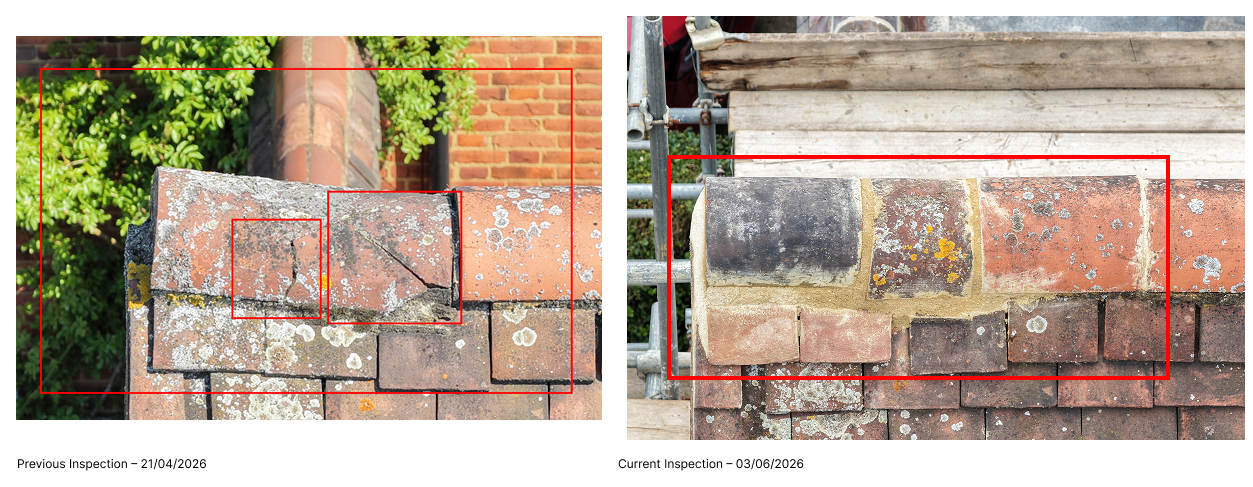
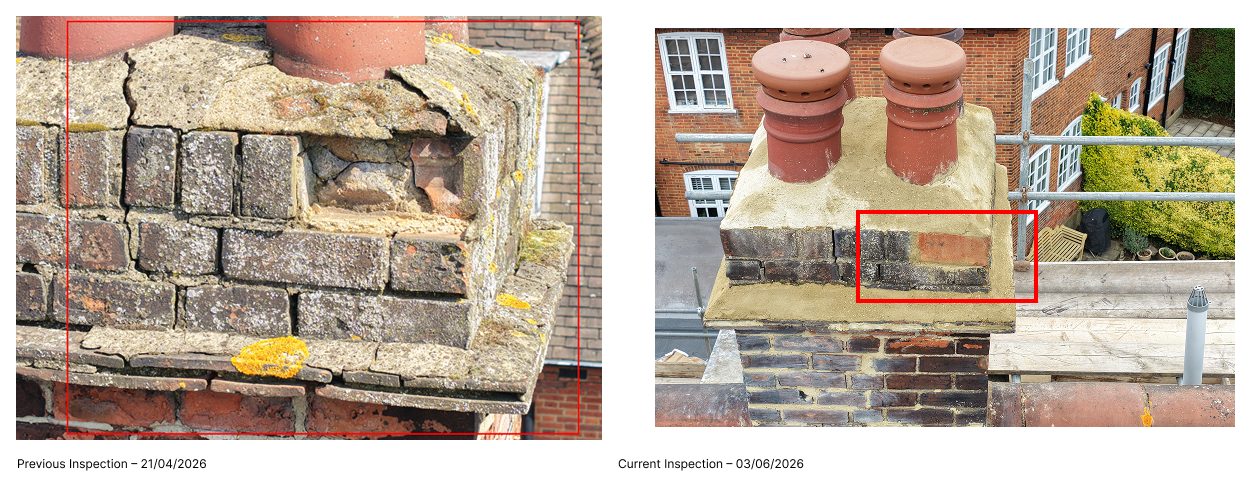
During the initial survey, a number of defects were identified across the roof. These included displaced and damaged roof tiles, deteriorated chimney stacks, missing mortar to ridge tiles and areas where daylight could be seen through openings in the roof covering. The chimneys were of particular concern, with significant weathering, deteriorated flaunching and open joints visible at high level.
Following the inspection, the client used the report to discuss the findings with their roofing contractor and arrange remedial works.
This week I was invited back to the property to carry out a second drone inspection and document what had changed.
Why Follow-Up Inspections Matter
One of the most valuable uses of drone technology is not simply identifying defects, but creating an independent visual record before and after works take place.
Rather than relying solely on written assurances, property owners and project teams can compare high-resolution imagery captured from the same vantage points and assess how the condition of the roof has changed over time.
For this project, the follow-up inspection focused on:
Roof slopes previously showing displaced or damaged tiles
Ridge lines where mortar loss had been identified
Chimney stacks requiring remedial works
Areas previously inaccessible from ground level
Additional roof sections that had not been inspected during the original survey
What Had Changed?
The second inspection identified a number of visible changes across the roof.
New mortar was visible to sections of the ridge line where mortar loss had previously been observed. Several areas of tile displacement were no longer visible and debris previously present within gutters had been removed.
The most noticeable changes were to the chimney stacks. New mortar was visible to sections of the chimney heads and new chimney cowls had been installed. In several areas the condition of the upper chimney structure appeared materially different from the original inspection.
Not every issue had disappeared, however. Some areas of tile irregularity remained visible and certain roof sections were partially obscured by scaffolding, highlighting the importance of documenting limitations within any inspection report.
The Value of a Visual Record
For renovation projects, heritage buildings and managed properties, having a photographic record of roof conditions before and after works can be extremely useful.
It allows property owners, contractors and project teams to understand what has changed, identify areas requiring further attention and maintain a clear record of the condition of the building over time.
In this case, the follow-up inspection provided the client with an updated visual record of the roof following the contractor's attendance and helped document changes that had occurred since the original survey.
If you are managing a renovation project, historic building or residential property portfolio and require independent aerial roof inspections, feel free to get in touch.
CAV Aerial provides drone roof inspections, condition surveys and photographic documentation across London and the South East. If you would like a drone survey please contact us on 07377869579 or fill out the form below.