
Drone & Internal Roof Survey in Highgate: Chimney Leaks & Damp Investigation
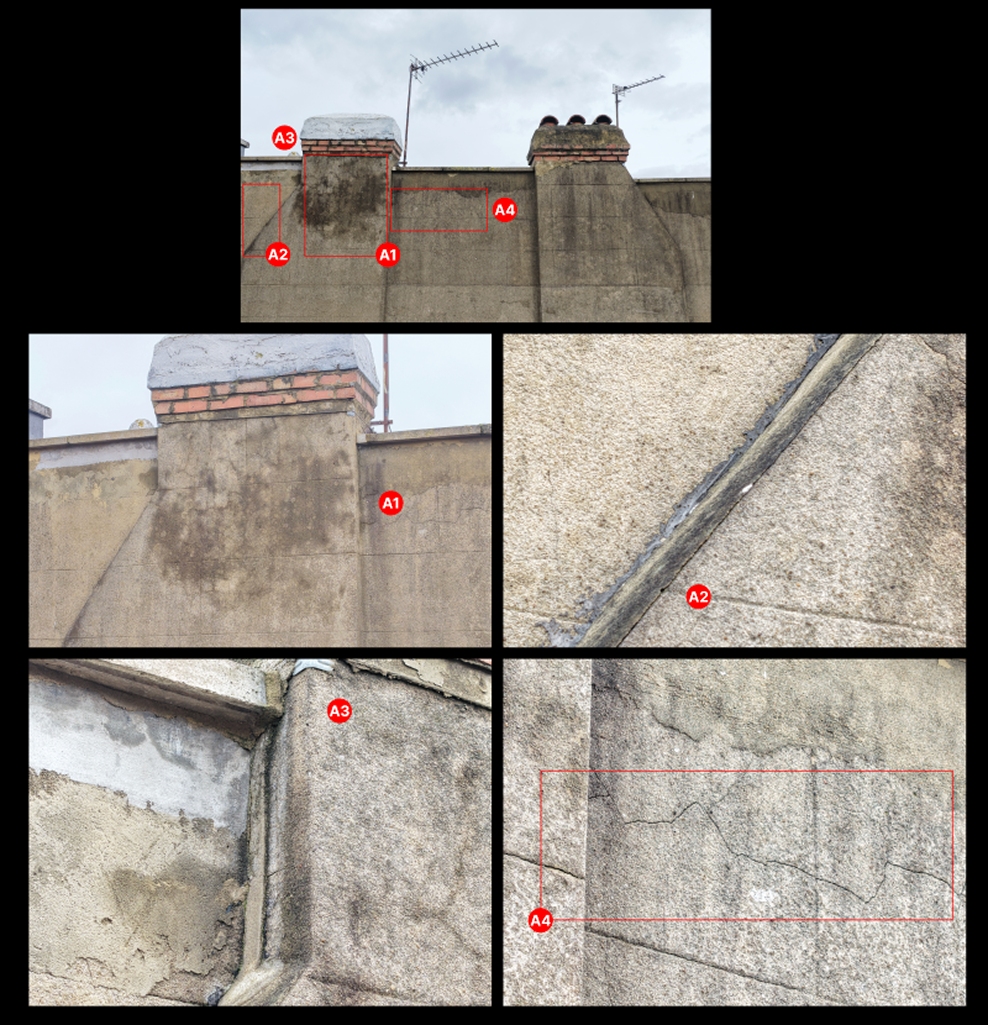
The drone captured detailed external images of the chimney breast. The render shows visible cracking, areas of moisture staining, and general deterioration requiring targeted repairs. These moisture-affected areas align with the elevated moisture readings recorded internally, indicating a likely point of water ingress.
Damp around a chimney breast is one of the most common issues in Highgate properties.
Recently, we carried out a drone roof survey at a residential property in Highgate, after the owners noticed staining and moisture in their main bedroom.
Instead of guessing, or jumping straight to scaffolding, we used a drone inspection combined with internal moisture readings to identify the likely source of the problem.
The Problem
Damp patches on the chimney breast
Staining near the ceiling junction
Discolouration around the eaves
Ongoing concerns after heavy rain
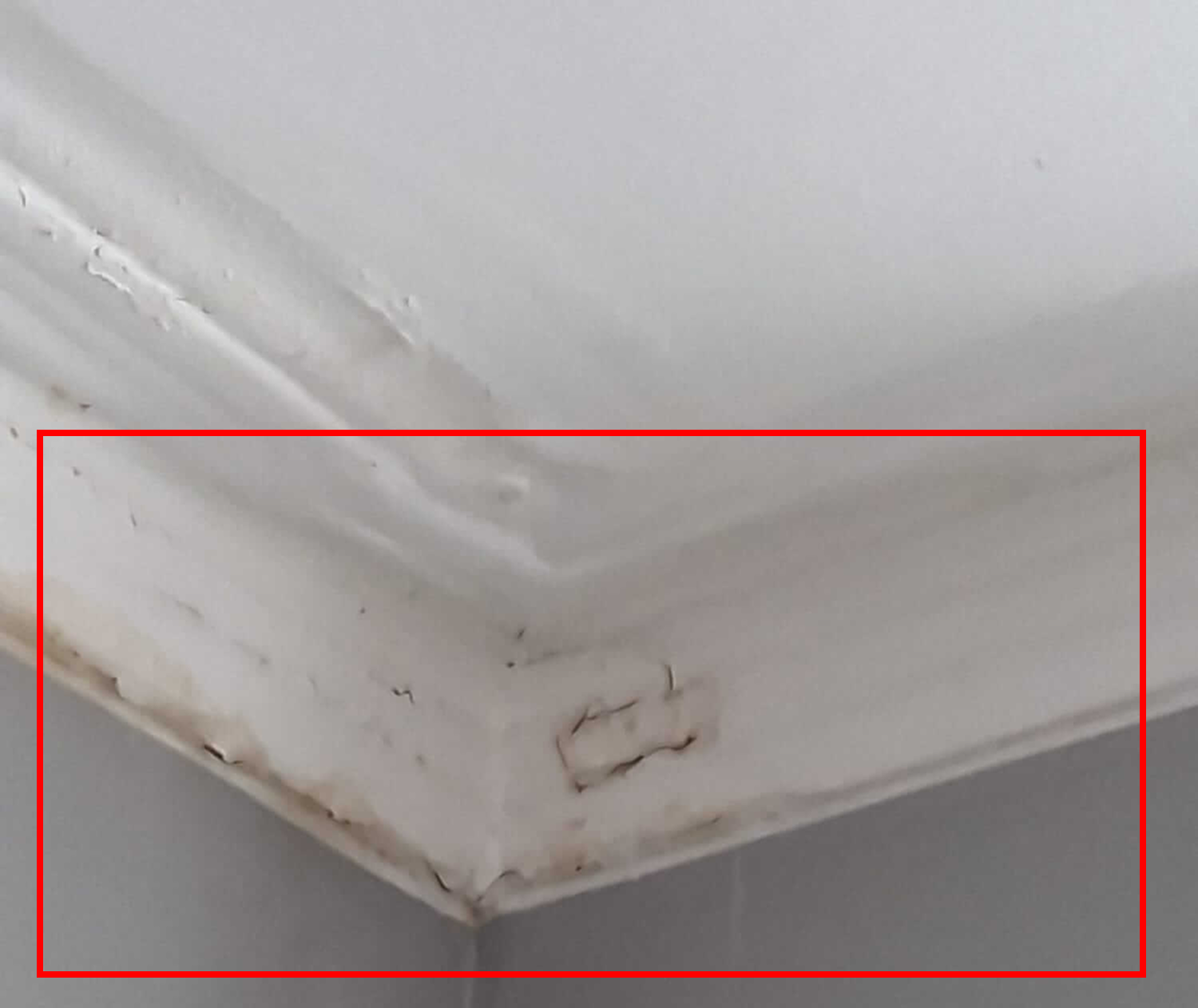
Main bedroom – Damp patches visible to the chimney breast, staining at the ceiling junction, and discolouration around the eaves.
The property is typical of Highgate, chimney stacks, parapet walls, flat roof sections and neighbouring buildings close by.
In this type of construction, water rarely travels in a straight line. It can enter at roof level and appear internally several feet away.
That’s why external inspection is critical.
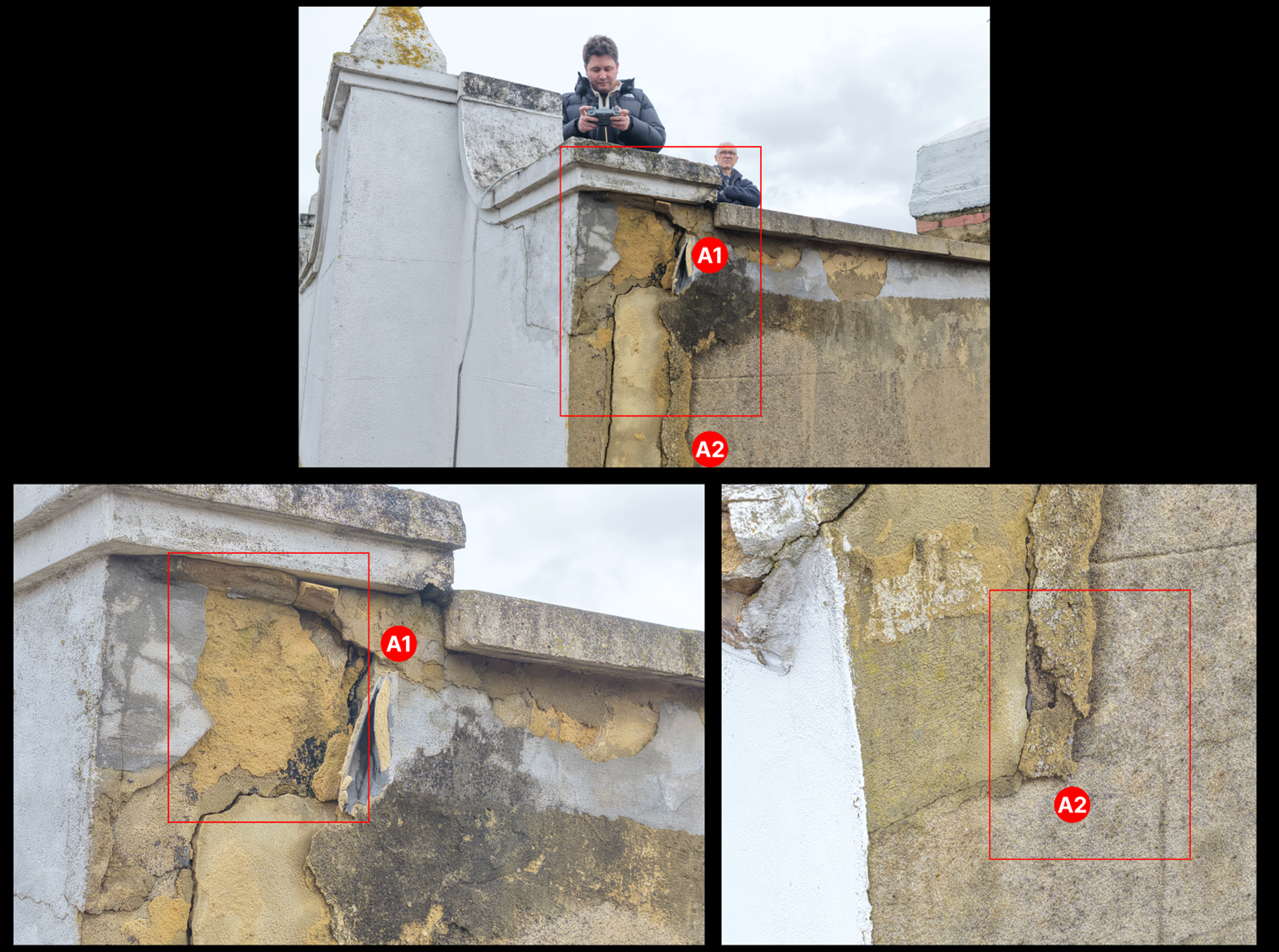
Drone inspection of the external wall render corresponding to the bedroom to assess cracking, deterioration, and potential moisture entry points.
How We Inspected the Roof
We carried out:
A drone survey
High-resolution façade and chimney photography
Internal moisture meter readings
External surface moisture checks where accessible
Review of neighbouring roof junctions
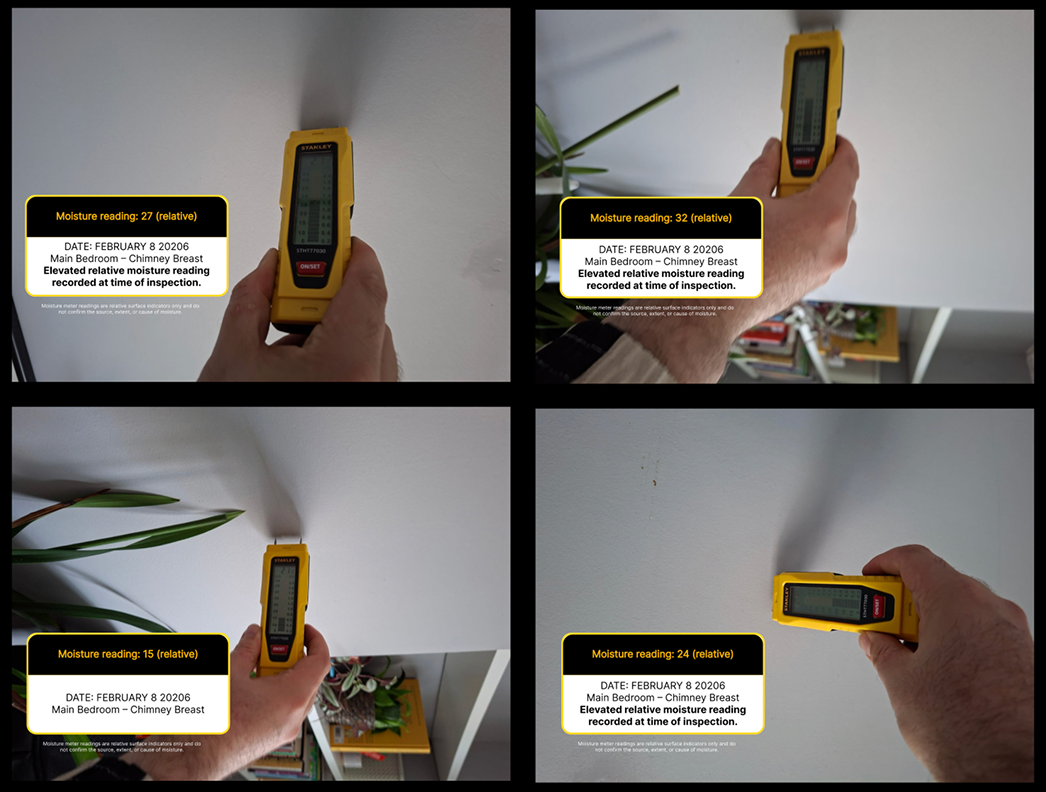
Elevated internal moisture readings were recorded, supporting the presence of damp within the affected areas. These results align with the external defects identified via drone inspection.
1. Elevated Moisture in the Main Bedroom
Moisture readings were higher than normal around:
The front and sides of the chimney breast
The ceiling-to-wall junction
The eaves area on the roadside elevation
Visible staining matched these readings.
That alignment is important — it tells us the moisture is active and not just historic decoration damage.
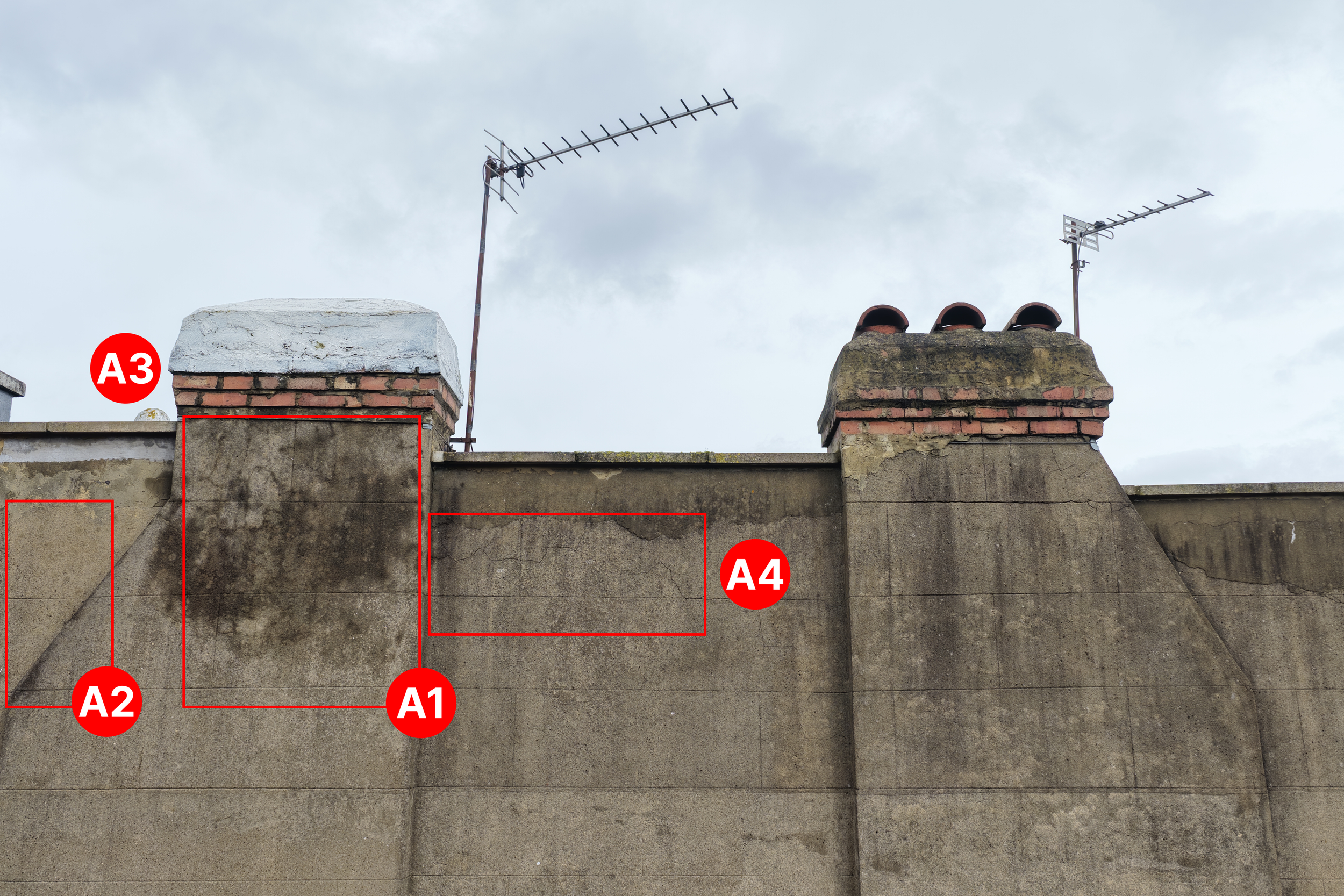
Chimney Stack Defects Identified
The drone inspection of the chimney stack showed:
Cracked render
Masonry deterioration
Surface discolouration
Elevated moisture in accessible brickwork
Weathering at roof junctions
The chimney serving the affected bedroom was visibly darker than surrounding areas, often a sign of retained moisture.
In Highgate homes, chimney stacks are a common failure point due to:
Ageing lead flashings
Cracked mortar joints
Flaunching breakdown
Poorly sealed roof junctions
Conclusion
By combining drone imagery with internal moisture readings, we were able to clearly identify the likely source of water ingress without the need for immediate scaffolding or invasive investigation.
The alignment between the external chimney defects and the elevated internal moisture readings provided a clear, evidence-based picture of the issue. Rather than relying on guesswork, the homeowners were able to understand:
Where the moisture was entering
Why it was appearing in the main bedroom
Which areas required targeted repair
This level of clarity allows contractors to scope works accurately — focusing on chimney render repairs, junction detailing and associated remedial works — instead of undertaking unnecessary or overly broad repairs.
A structured drone and internal survey provides confidence, reduces uncertainty, and supports informed decision-making.
If you are experiencing damp, staining, or suspected roof leaks in your property, we can provide a detailed, independent inspection report to help you move forward with the right repairs.
Get in touch to arrange a drone and internal roof survey in Highgate or the surrounding areas.